AYUSH Insurance in India: Why Cashless Ayurvedic Treatment Still Remains a Challenge
17-Apr-26 09:03:14
Introduction
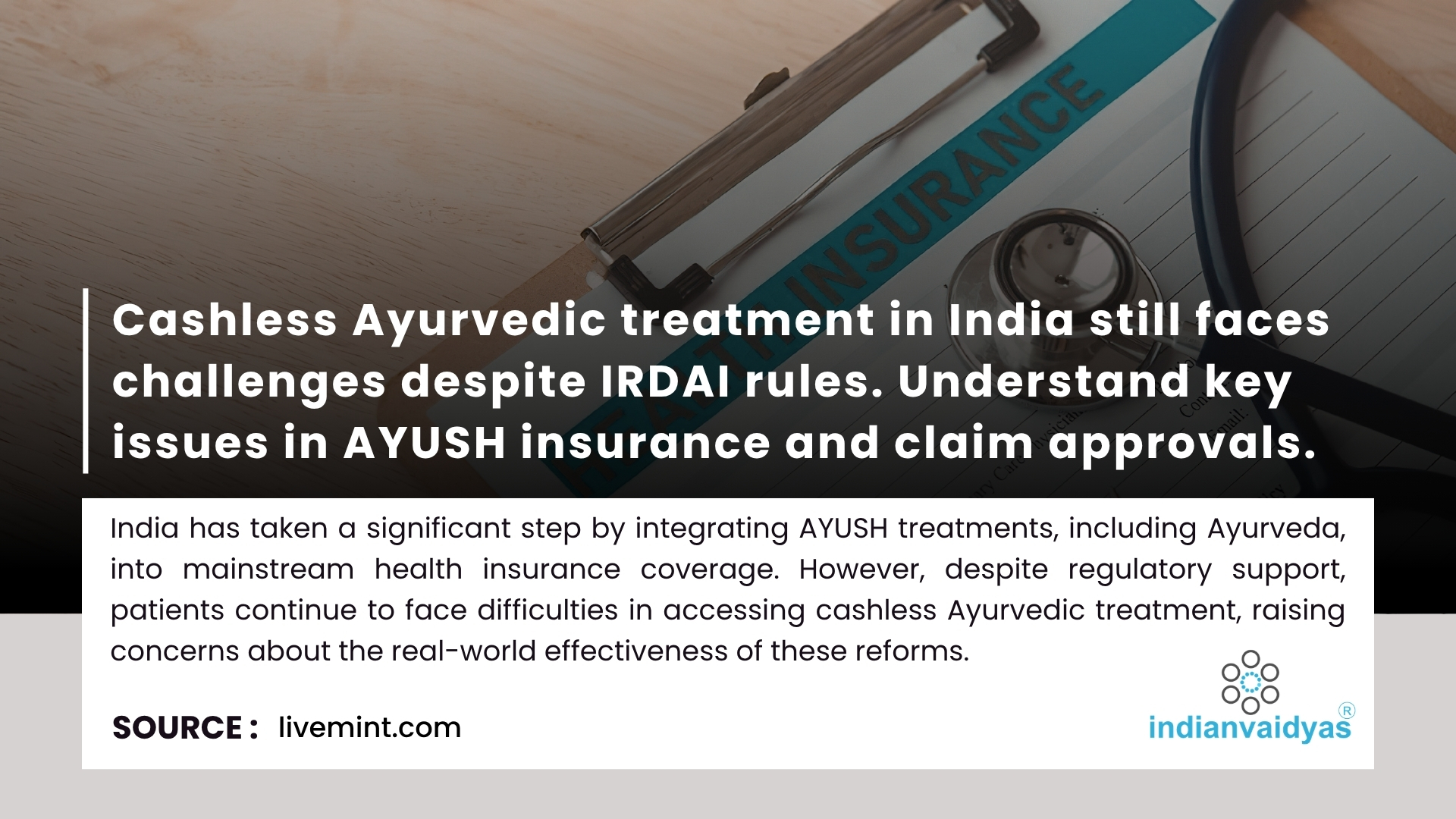
India has taken a significant step by integrating AYUSH treatments, including Ayurveda, into mainstream health insurance coverage. However, despite regulatory support, patients continue to face difficulties in accessing cashless Ayurvedic treatment, raising concerns about the real-world effectiveness of these reforms.
This gap between policy intent and on-ground implementation highlights a key challenge in the evolving AYUSH insurance landscape in India.
About the Development
The Insurance Regulatory and Development Authority of India (IRDAI) has issued guidelines directing insurers to provide coverage for AYUSH treatments on par with allopathic care. The intent was to make Ayurveda more accessible, affordable, and integrated into the broader healthcare ecosystem.
However, on-ground realities present a different picture. While coverage exists on paper, cashless treatment options for Ayurveda remain limited, with many insurers still relying heavily on reimbursement-based models.
Several operational challenges contribute to this issue, including:
-
Limited empanelment of Ayurvedic hospitals
-
Strict documentation and pre-authorization requirements
-
Lack of standardized treatment protocols
-
Difficulty in differentiating between medical and wellness-based therapies
As a result, patients often face delays, rejections, or out-of-pocket expenses despite having insurance coverage.
Key Points
-
IRDAI mandates equal coverage for AYUSH and allopathic treatments
-
Cashless Ayurvedic treatment access remains restricted
-
High dependency on reimbursement instead of direct claims
-
Documentation and eligibility criteria lead to claim rejections
-
Limited network of empanelled Ayurvedic hospitals
-
Growing demand for Ayurveda amid insurance challenges
Why This Matters for Ayurveda in India
This issue goes beyond insurance—it directly impacts the accessibility and credibility of Ayurveda in modern healthcare.
With the rising burden of chronic diseases and increasing preference for natural healing, Ayurveda is gaining widespread acceptance. However, limited insurance usability can discourage patients from choosing Ayurvedic treatment, especially when upfront costs are involved.
For Ayurveda to truly integrate into mainstream healthcare, financial accessibility through smooth insurance processes is essential. Streamlined claim approvals and expanded hospital networks can significantly boost patient confidence.
Indianvaidyas Perspective
From the Indianvaidyas perspective, this development represents both progress and a clear opportunity for improvement.
While regulatory recognition of AYUSH treatments is a strong step forward, the lack of efficient claim processing systems highlights the need for better alignment between insurers, hospitals, and regulatory bodies.
Indianvaidyas believes that:
-
Standardizing Ayurvedic treatment documentation
-
Expanding empanelled hospital networks
-
Increasing awareness among patients and insurers
can help bridge the current gap and make cashless Ayurvedic treatment a practical reality.
Conclusion
The inclusion of Ayurveda under health insurance marks a significant milestone for traditional medicine in India. However, true success will depend on effective implementation at the ground level.
As demand for AYUSH treatments continues to grow, simplifying insurance processes and enabling seamless cashless access will be crucial in strengthening Ayurveda’s role in India’s healthcare ecosystem.
Source: livemint.com