Delhi CM Rekha Gupta Inaugurates ICU & Endoscopy Suite; Launches Integrated AYUSH Stress Management Programme
01-Mar-26 06:43:22
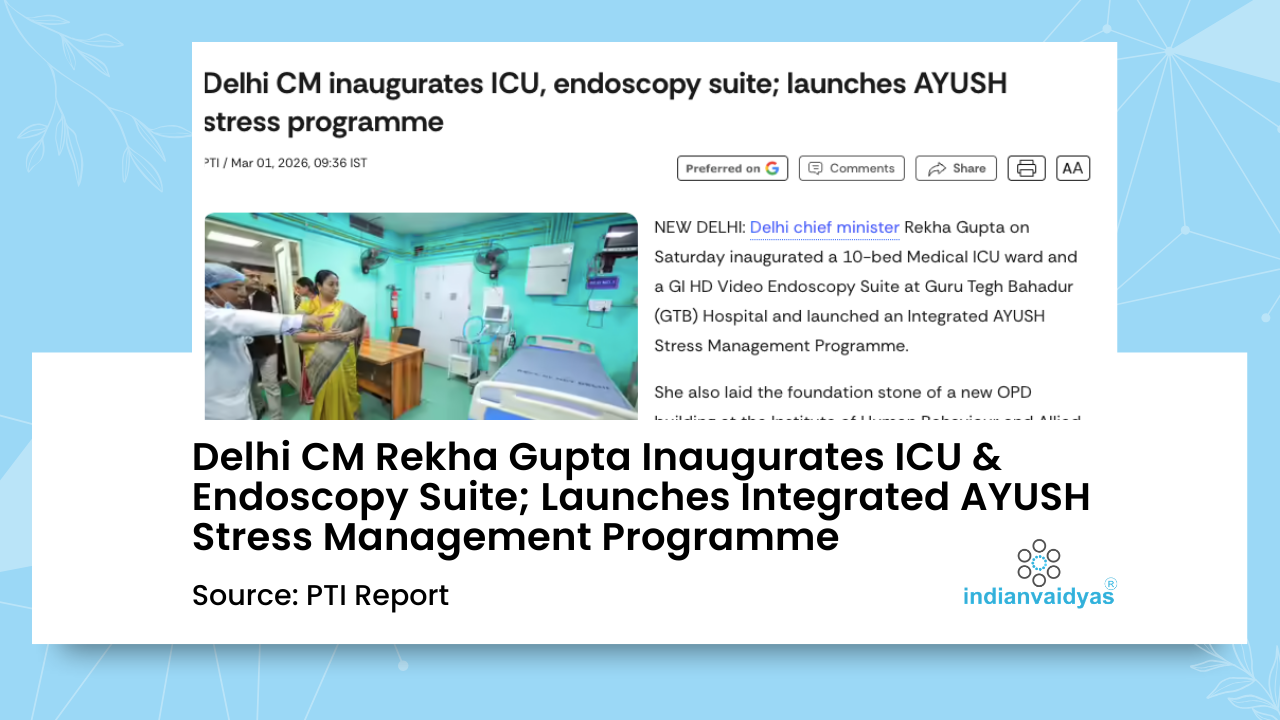
Delhi Strengthens Modern Healthcare While Expanding AYUSH Integration
In a significant move reflecting the growing integration of traditional and modern healthcare systems, Delhi Chief Minister Rekha Gupta inaugurated a 10-bed Medical ICU ward and a GI HD Video Endoscopy Suite at Guru Teg Bahadur (GTB) Hospital. Alongside these developments, she launched an Integrated AYUSH Stress Management Programme, marking a notable step toward preventive and holistic healthcare in the capital.
The announcement signals a balanced healthcare strategy: infrastructure modernization combined with AYUSH-based wellness programmes.
AYUSH Stress Management Programme: A Preventive Healthcare Push
The Integrated AYUSH Stress Management Programme aims to address rising cases of:
• Work-related stress
• Lifestyle disorders
• Anxiety and mental fatigue
• Sleep disturbances
• Psychosomatic conditions
The programme integrates principles from:
• Ayurveda
• Yoga
• Naturopathy
• Holistic lifestyle medicine
This initiative aligns with India’s broader preventive healthcare model under the Ministry of AYUSH, which emphasizes root-cause correction rather than symptomatic treatment.
Search interest for terms like:
• Ayurveda for stress relief
• Yoga therapy in Delhi
• AYUSH treatment in Delhi
• Holistic mental health India
continues to grow across Google and Bing.
GTB Hospital Upgrade: Modern Diagnostics + Traditional Care
The newly inaugurated facilities include:
• 10-bed ICU for critical care
• Advanced GI HD video endoscopy suite
• Enhanced diagnostic capabilities
The upgrade reflects Delhi’s commitment to strengthening public health infrastructure while simultaneously expanding AYUSH integration.
The government also laid the foundation stone for a new OPD building at the Institute of Human Behaviour and Allied Sciences (IHBAS), further indicating long-term healthcare expansion.
What This Means for Ayurveda in Delhi
Delhi has seen increasing demand for:
• Vaidyas in Delhi
• Panchakarma therapy centres
• Integrative stress management programmes
• Ayurvedic doctors for lifestyle diseases
The launch of an AYUSH stress management programme within a government healthcare framework signals institutional recognition of Ayurveda and Yoga as supportive systems in mental and lifestyle health.
This is consistent with India’s growing integrative healthcare model.
Integrative Healthcare: The Emerging Model in India
India is witnessing a shift toward integrative medicine that combines:
• Modern diagnostics
• Intensive care facilities
• Ayurvedic therapies
• Yoga and mindfulness
• Preventive lifestyle management
This hybrid healthcare model strengthens long-term disease management while reducing chronic burden.
Government-backed programmes increase trust and awareness among citizens searching for evidence-based Ayurvedic care.
National Trend: AYUSH in Public Health Policy
The Delhi initiative reflects a larger national trend:
• Expansion of AYUSH wellness centres
• Integration of Yoga therapy in government hospitals
• Research-based Ayurveda institutions
• Stress and lifestyle disease management programmes
As public healthcare evolves, AYUSH systems are moving from alternative to integrative status.
Role of Qualified Vaidyas in Urban Healthcare
With stress becoming one of the largest health concerns in urban India, demand for qualified practitioners is rising.
Patients searching for:
• Trusted Vaidyas in Delhi
• Ayurvedic doctors in India
• Stress management through Ayurveda
• Natural anxiety treatment
should consult certified and registered professionals.
Platforms like Indianvaidyas aim to connect individuals with verified Ayurvedic doctors across major cities, including Delhi, Mumbai, Hyderabad, Bengaluru, Chennai, and Pune.
Why This News Matters for Indianvaidyas Authority
This development reinforces:
-
Government-backed AYUSH expansion
-
Institutional acceptance of Ayurveda
-
Preventive healthcare prioritisation
-
Integrative medicine growth in metropolitan cities
From an SEO perspective, this strengthens keyword relevance for:
• Ayurveda news India
• AYUSH programme Delhi
• Integrative healthcare India
• Vaidyas in Delhi
Source
Primary Source: PTI Report
Location: New Delhi
Institutions: GTB Hospital, IHBAS