Digital Transformation: AI Adoption Rising in Indian Healthcare but Remains Uneven, Finds Report
12-Sep-26 08:14:28
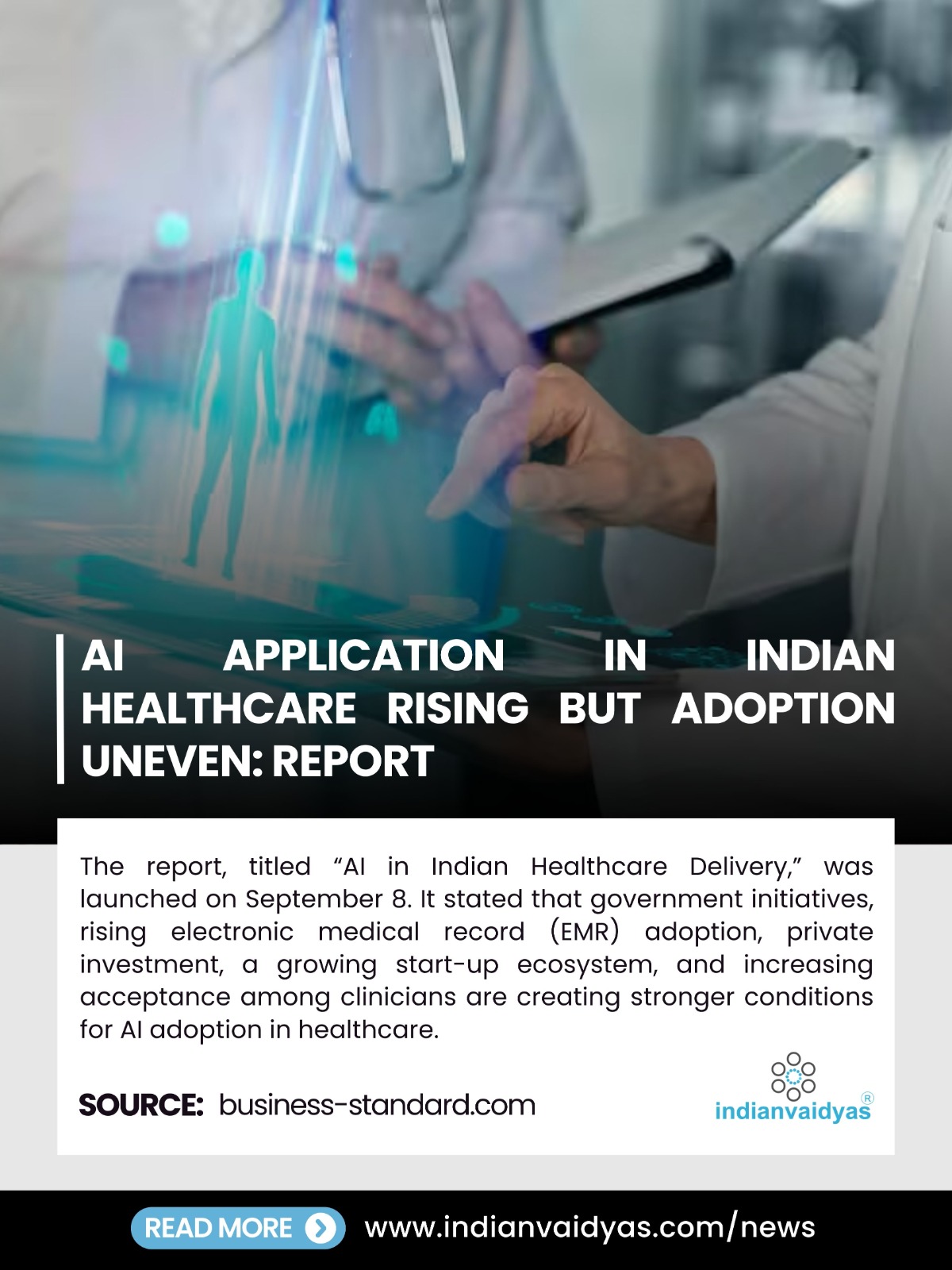
Artificial intelligence (AI) is rapidly transitioning from experimental pilot projects into real-world applications across Indian healthcare facilities. However, deployment remains significantly uneven between operational workflows and direct clinical decision-making, according to a joint study titled “AI in Indian Healthcare Delivery” released by Bain & Company and HealthQuad.
The report highlights that while expanding private investment, government digital infrastructure pushes, and clinician acceptance are accelerating AI integration, most hospitals continue to test advanced algorithms within controlled settings rather than deploying them at scale.
Operational Gains Leading Over Clinical Workflows
The study indicates that AI adoption is progressing fastest in non-clinical, administrative tasks where implementation barriers are lower and operational returns can be quantified immediately.
Key findings on current deployment patterns include:
-
Administrative Efficiency: Hospitals are leveraging AI for scheduling, billing automation, operating theater (OT) and ICU resource optimization, and reducing paperwork burdens on medical personnel.
-
Supportive Clinical Decision-Making: In digitally mature urban healthcare centers, clinical AI is being utilized primarily to support—rather than replace—physicians in diagnostic imaging, pre-visit triage, and post-discharge monitoring.
-
Cost Accessibility: Rapid advancements have dramatically lowered execution costs, with frontier AI model accessibility costs falling by approximately 92% since 2023, enabling startups to build localized solutions across the patient care journey.
Critical Gaps: Low EMR Penetration and Evolving Regulations
Despite technological availability, structural bottlenecks continue to hinder widespread clinical adoption across smaller and tier-2/3 medical facilities:
-
Low Electronic Medical Record (EMR) Adoption: EMR penetration in India is estimated at around 35%, remaining well below international benchmarks. Digital record-keeping remains concentrated in major private hospital chains, while smaller clinics depend on physical paper records.
-
Regulatory Frameworks: India's statutory framework for autonomous and adaptive clinical AI systems remains in an evolving phase, particularly regarding data governance, clinical validation, and legal liability.
-
Local Tech Talent Deficit: While India possesses a vast technology workforce, much of the specialized AI talent currently serves global technology markets rather than building domain-specific healthcare models tailored for domestic demographics.
Implications for Integrative Medicine and AYUSH Digitization
The push toward structured digital records and interoperable health data directly intersects with central initiatives under the Ayushman Bharat Digital Mission (ABDM).
Integrating clinical AI systems relies heavily on standardized data input, presenting both a challenge and an opportunity for Ayurveda education and practice, where clinical documentation and classical diagnostics (Nidana) are increasingly being digitized for research and evidence-based validation.
Policy guidelines encouraged by the Ministry of Ayush emphasize that adopting digital health record systems across Ayush hospitals will be essential to bridging the data gap, ensuring traditional medicine can leverage predictive AI tools for clinical safety and therapeutic monitoring.
Stay tuned to our Ayurveda News hub for ongoing updates on digital health, healthcare technology, and clinical research developments.