Global Expansion: As Yoga and Ayurveda Join India's Health Diplomacy, Experts Press for Credible International Standards
08-Sep-26 11:32:14
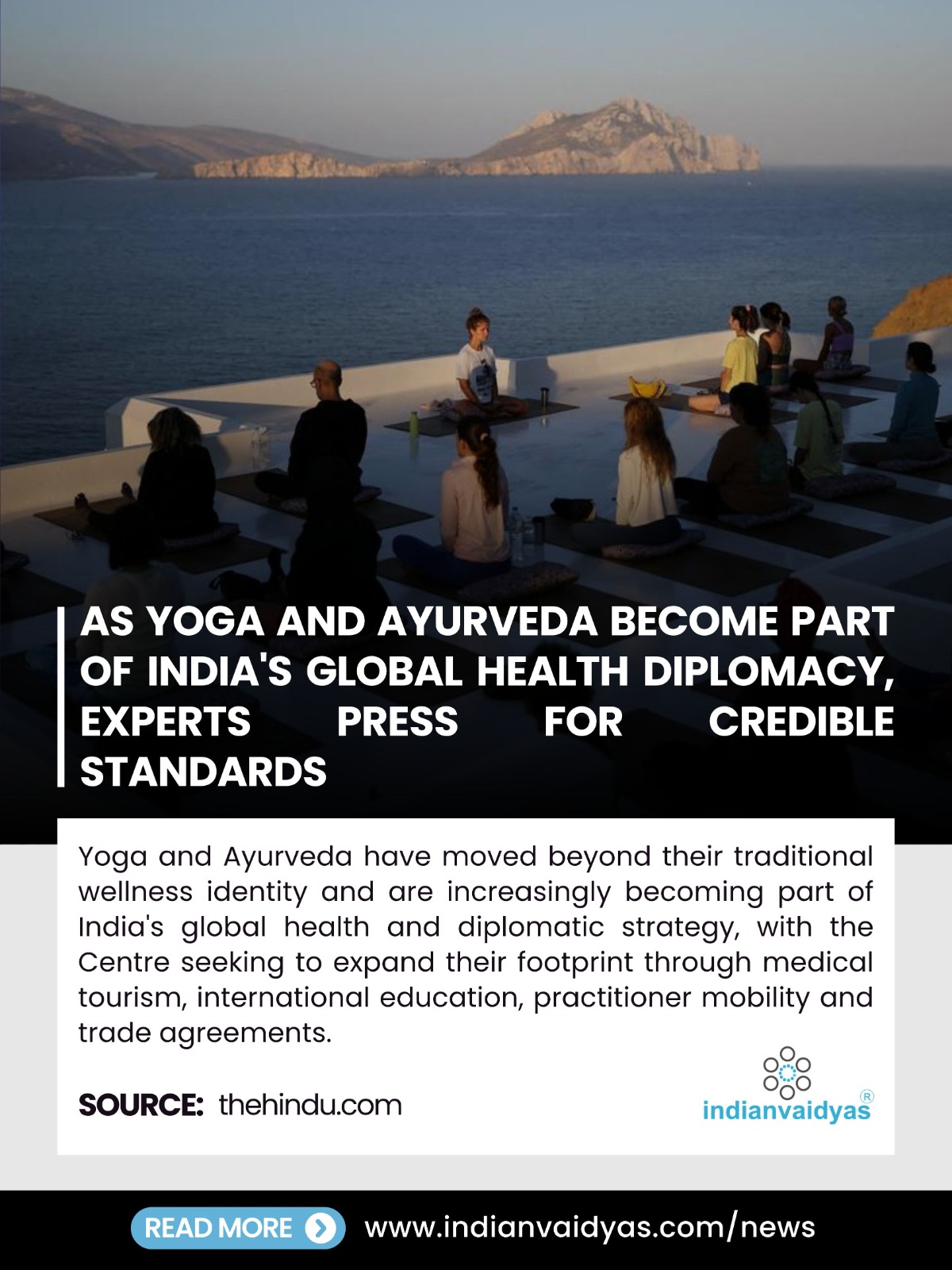
Traditional Indian systems of medicine—encompassing Ayurveda, Yoga, Naturopathy, Unani, Siddha, and Homeopathy (AYUSH)—have shifted from cultural exports into formalized components of India's international trade diplomacy.
Recent bilateral trade pacts, including trade agreements with Oman, New Zealand, and the European Union, have introduced dedicated provisions and annexes establishing treaty-based frameworks for AYUSH practitioners. These frameworks facilitate structured mobility pathways, professional licensing cooperation, and practitioner recognition across borders.
However, healthcare researchers and regulatory experts emphasize that trade access alone is insufficient. To establish AYUSH as a mainstream global healthcare option, India must develop credible clinical evidence, auditable manufacturing standards, and standardized practitioner qualifications to satisfy international regulators.
Expanding Educational Pathways and Medical Value Travel
India’s global health strategy leverages both international trade agreements and dedicated immigration frameworks to encourage health tourism and educational exchanges:
Dedicated AYUSH Visas: Introduced in 2023, the special visa stream enabled over 3,300 foreign nationals to travel to India specifically for traditional medical therapies between January 2023 and December 2025.
AYUSH Fellowship Scheme: The government currently supports 260 international scholars from 32 countries enrolled in higher education programs across Indian AYUSH institutions.
Rising Medical Value Travel: While overall foreign medical arrivals in India grew from 1.83 lakh in 2020 to 6.44 lakh in 2024, experts note the urgent need for consolidated, country-wise tracking specific to AYUSH patients to measure exact market performance.
Key Regulatory Challenges Highlighted by Experts
Despite strong diplomatic momentum, foreign health regulators in evidence-driven markets require stringent clinical proof and safety metrics before granting direct patient access.
Main challenges identified by healthcare analysts include:
- Thin Clinical Evidence Base: Traditional formulations often lack large-scale, randomized controlled trial (RCT) data required by Western medical boards.
- Product Quality and Heavy Metal Audits: Importing countries frequently flag heavy metal content or quality variations in classic botanical preparations, necessitating standardized manufacturing practices.
Mutual Recognition Annexes: Experts suggest moving away from broad, general commitments to negotiate specific Mutual Recognition Agreements (MRAs) that clearly define qualifying degrees and permitted scopes of practice.
Elevating Research to Meet Global Expectations
Addressing these regulatory barriers aligns directly with global initiatives led by the WHO Global Centre for Traditional Medicine (GCTM) in Jamnagar, which focuses on generating scientific data, methodology standards, and digital health frameworks.