India–EU Trade Agreement Opens New Horizons for Ayurveda and AYUSH Systems
29-Jan-26 18:54:23
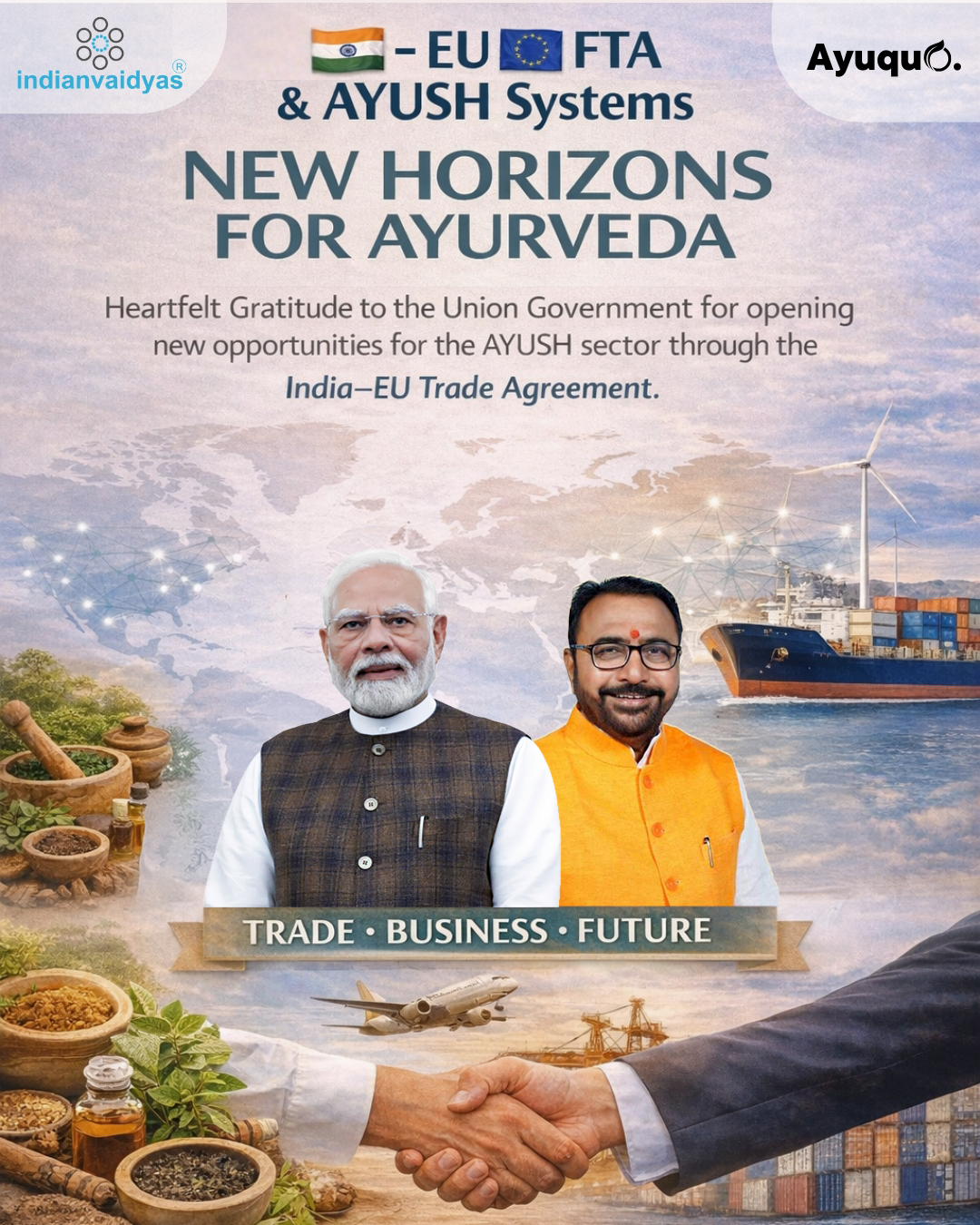
New Delhi: The proposed India–European Union (EU) Trade Agreement is expected to create significant new opportunities for Ayurveda and AYUSH systems globally. The agreement aims to strengthen trade relations between India and the European Union, while opening international pathways for traditional Indian healthcare systems.
According to policy observers, the trade agreement could facilitate wider global acceptance of Ayurveda, improve regulatory cooperation, and support the expansion of AYUSH products and services in European markets.
Ayurveda and AYUSH in Global Trade
Ayurveda and other AYUSH systems have witnessed growing international interest in recent years, particularly in areas such as:
-
Preventive healthcare
-
Wellness and lifestyle management
-
Herbal medicines and natural formulations
The India–EU trade framework is expected to simplify trade processes, improve compliance with international standards, and enhance market access for AYUSH-based products and services.
Opportunities for AYUSH Industry and Practitioners
Experts believe that the agreement could benefit:
-
AYUSH manufacturers and exporters by reducing trade barriers
-
Research institutions through increased international collaboration
-
Ayurvedic doctors and practitioners by expanding the global demand for authentic Ayurveda-based care
The agreement may also encourage innovation, quality assurance, and scientific validation within the AYUSH sector.
Strengthening Research and Standards
One anticipated outcome of the trade agreement is improved alignment of quality, safety, and regulatory standards between India and the EU. This could support:
-
Evidence-based research in Ayurveda
-
Standardisation of herbal medicines
-
Greater credibility of AYUSH systems in international healthcare markets
IndianVaidyas Perspective
According to IndianVaidyas, the India–EU trade agreement represents an important milestone for positioning Ayurveda and AYUSH systems as globally relevant healthcare solutions. The initiative reflects India’s growing role in shaping the future of integrative and traditional medicine worldwide.
Source
Based on official policy communications and public information related to the India–EU Trade Agreement. European Commission