Legal Framework: Decoding Safety Regulations, Adverse Reaction Reporting, and Pharmacovigilance in Ayurvedic Medicine
08-Sep-26 11:38:06
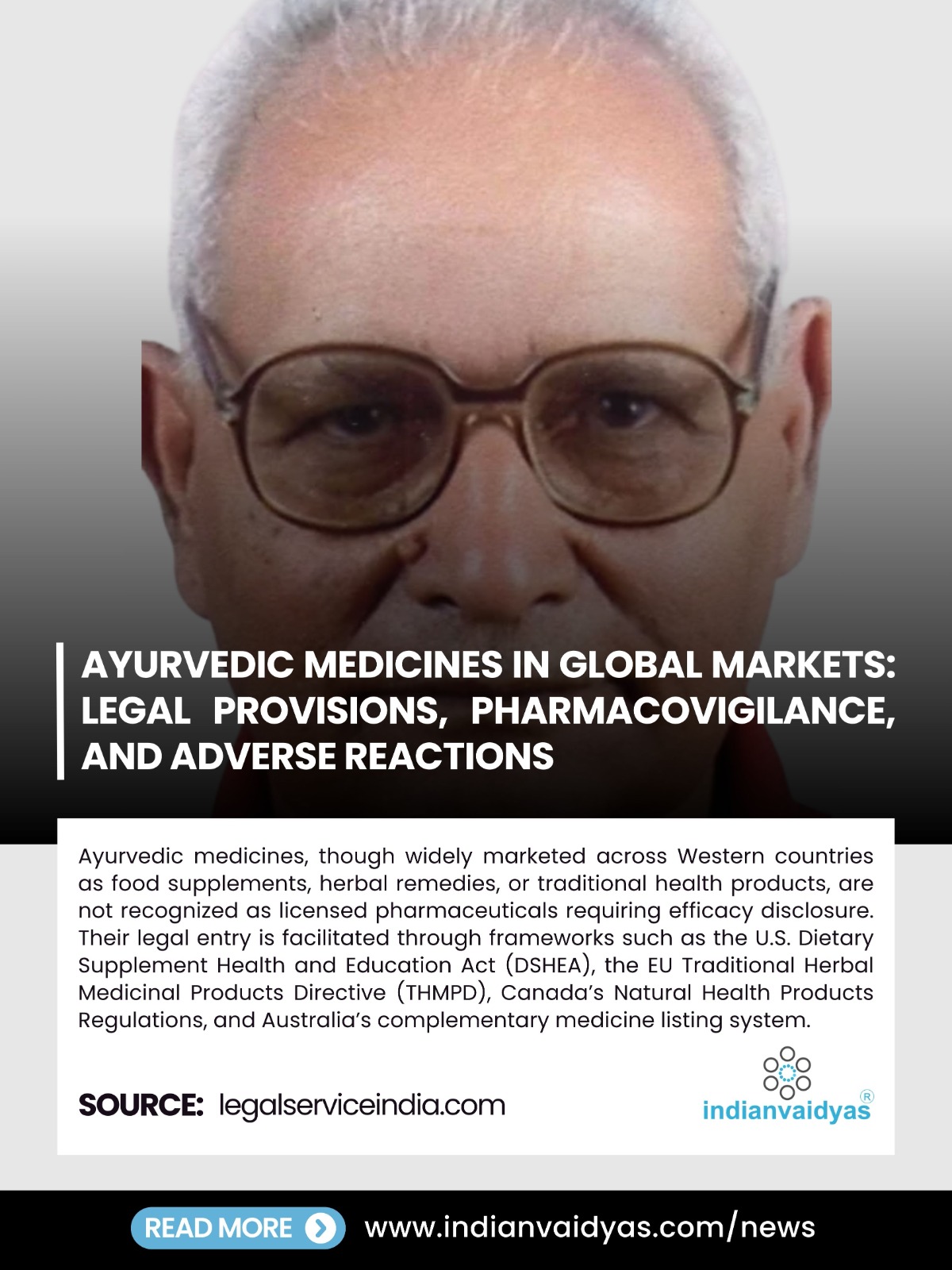
As the global demand for traditional and herbal healthcare surges, the regulatory scrutiny surrounding the safety, quality control, and post-market surveillance of classical and proprietary Ayurvedic formulations has intensified.
While Ayurvedic medicines are traditionally considered safe due to centuries of observational usage, modern legal and clinical standards necessitate a robust pharmacovigilance framework to detect, assess, and prevent adverse drug reactions (ADRs) resulting from poor quality control, adulteration, misidentification of raw herbs, or improper clinical administration.
In India, the manufacturing, testing, and distribution of Ayurvedic formulations are regulated under specific provisions of the Drugs and Cosmetics Act, 1940, and the rules framed thereunder, enforced in coordination with the central regulatory bodies.
Regulatory Architecture Under the Drugs and Cosmetics Act
The legal compliance framework for Ayurvedic drugs differs from that of conventional pharmaceuticals, balancing traditional classical text compliance with modern quality assurance:
-
Chapter IVA of the Drugs and Cosmetics Act: Deals explicitly with the provisions relating to Ayurvedic, Siddha, and Unani (ASU) drugs, defining standards for manufacturing, licensing, labeling, and prohibition of misbranded or adulterated products.
-
ASU Drugs Technical Advisory Board (ASUDTAB) & Consultative Committee (ASUDCC): Statutory bodies that advise central and state governments on technical regulatory matters and policy enforcement.
-
Good Manufacturing Practices (GMP - Schedule T): Mandates factory standards, sanitation, quality control testing, raw material authentication, and batch manufacturing records for all licensed ASU drug manufacturers.
The Pharmacovigilance Mechanism for AYUSH Drugs
To strengthen drug safety monitoring, the National Pharmacovigilance Centre (NPvCC) for ASU & H drugs—operating under the Ministry of Ayush —coordinates a multi-tier surveillance network comprising Intermediary (IPvCC) and Peripheral Pharmacovigilance Centres (PPvCC) across India.
Key legal and operational elements of the pharmacovigilance program include:
-
Adverse Event Reporting: Spontaneous reporting protocols allowing clinicians, researchers, and patients to log suspected adverse events, product defect reports, or misleading advertisements.
-
Heavy Metal & Microbial Standards: Statutory limits enforced for heavy metals (such as Lead, Mercury, Arsenic, and Cadmium), pesticide residues, microbial load, and aflatoxins in raw and finished products.
-
Monitoring Misleading Advertisements: Strict enforcement under the Drugs and Magic Remedies (Objectionable Advertisements) Act, 1954, prohibiting unsubstantiated cure claims for specific chronic diseases.
Strengthening Legal & Clinical Accountability
Legal experts and regulatory authorities emphasize that maintaining public trust in traditional healing systems requires strict enforcement against illegal, unapproved, or adulterated formulations marketed without valid manufacturing licenses.
This emphasis on regulatory compliance and patient safety is reshaping modern Ayurveda education, where academic curricula increasingly integrate topics on toxicology (Agada Tantra), modern pharmacology, clinical trial ethics, and statutory regulatory requirements.
By aligning classical manufacturing protocols with modern pharmacovigilance, India's traditional medicine sector continues to build a transparent, evidence-backed foundation for domestic public health and international trade.
Stay tuned to our Ayurveda News hub for ongoing legal analysis, regulatory alerts, and clinical safety updates across the Ayush sector.