PM Modi Highlights India’s Ayurveda, Handloom and Culinary Heritage Through G7 Gifts
20-Jun-26 11:54:45
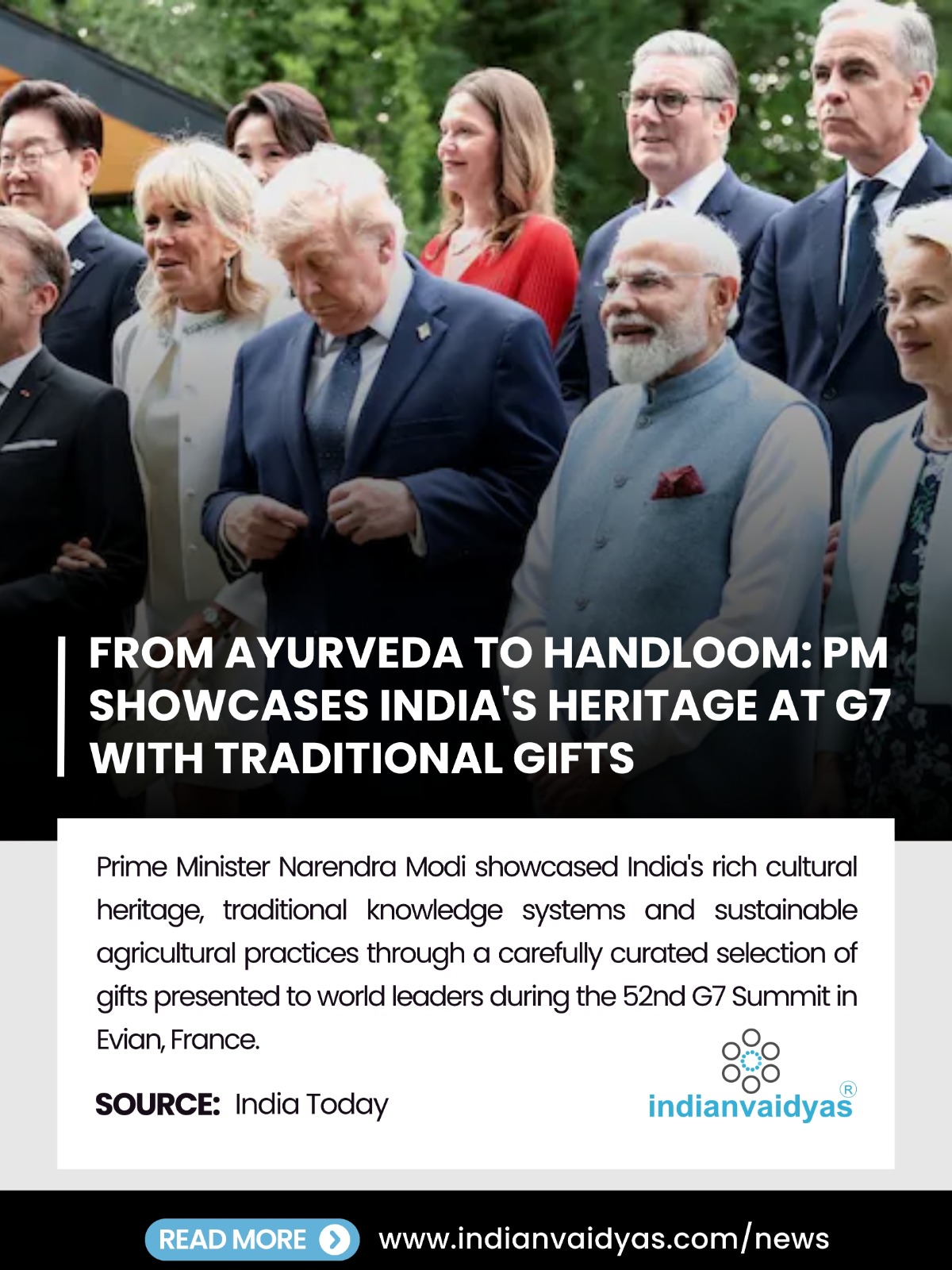
Prime Minister Narendra Modi used the global platform of the G7 Summit in Evian, France, to present India’s rich cultural heritage, traditional wellness wisdom and sustainable agricultural practices before world leaders.
Through a carefully selected range of gifts, PM Modi highlighted India’s deep connection with Ayurveda, natural health, handloom traditions and regional food culture. The gifts included Ramban Honey from Jammu and Kashmir, Lakadong Turmeric from Meghalaya, Nagauri Ashwagandha from Rajasthan, a Banarasi silk stole from Uttar Pradesh, and Thekua, a traditional sweet from Bihar and Jharkhand.
The gesture was more than a diplomatic exchange. It reflected India’s civilisational identity, where wellness, food, herbs, textiles and local traditions have always been closely connected with daily life.
India’s Traditional Wellness on the Global Stage
At a time when the world is increasingly focusing on natural health, preventive care and sustainable living, India’s selection of gifts carried a strong message.
Many of the items presented by PM Modi have a long association with Indian wellness traditions. Ingredients such as turmeric, honey and ashwagandha have been valued in Ayurveda and traditional Indian households for generations.
By presenting these products to global leaders, India showcased not only its cultural diversity but also the relevance of its ancient knowledge systems in the modern world.
Ramban Honey: A Natural Gift from Jammu and Kashmir
One of the gifts presented was Ramban Honey, sourced from the Chenab Valley region of Jammu and Kashmir.
Known for its unique flavour and natural richness, Ramban Honey reflects the biodiversity of the Himalayan region. It is produced by local beekeepers using traditional methods and is valued for its nutritional qualities.
In Ayurveda, honey has traditionally been used as a natural food and wellness-supporting ingredient. It is often associated with balance, nourishment and natural healing practices. The inclusion of Ramban Honey also highlighted the importance of local livelihoods and traditional beekeeping communities in India’s mountain regions.
Lakadong Turmeric: Meghalaya’s Golden Wellness Treasure
Another important gift was Lakadong Turmeric, cultivated in the Jaintia Hills of Meghalaya.
Lakadong Turmeric is widely known for its high curcumin content. Curcumin is the active compound in turmeric that has gained global attention for its antioxidant and anti-inflammatory properties.
This turmeric variety has also received a Geographical Indication, or GI tag, which recognises its unique regional identity and quality. For centuries, turmeric has been an important part of Indian kitchens, Ayurvedic traditions and home wellness practices.
By gifting Lakadong Turmeric, India brought attention to the strength of indigenous crops, sustainable farming and the traditional wisdom of local communities.
Nagauri Ashwagandha: Rajasthan’s Ayurvedic Heritage
PM Modi also presented Nagauri Ashwagandha, a GI-tagged medicinal herb from Rajasthan’s Nagaur district.
Ashwagandha is one of the most respected herbs in Ayurveda. Traditionally, it has been associated with strength, vitality, stress balance, immunity and overall well-being.
Nagauri Ashwagandha is considered one of the finest varieties of this herb. Its cultivation supports rural communities and reflects India’s long-standing knowledge of medicinal plants.
The gift served as a reminder that India’s Ayurvedic heritage continues to have global relevance, especially as more people around the world look for natural and holistic approaches to wellness.
Banarasi Silk Stole: India’s Handloom Excellence
Along with wellness products, PM Modi also presented a Banarasi silk stole from Uttar Pradesh.
Banarasi silk is one of India’s most prestigious handloom traditions. Woven by skilled artisans in Varanasi, it is known for its fine texture, intricate designs and beautiful zari work.
The Banarasi silk stole represented India’s artistic excellence and the craftsmanship of generations of weavers. It also highlighted the importance of preserving India’s handloom sector and traditional artisan communities.
Thekua: A Traditional Taste of Eastern India
PM Modi also gifted Thekua, a traditional delicacy from Bihar and Jharkhand, to Slovakia’s Speaker Richard Rai.
Thekua is usually made with wheat flour, jaggery or sugar, ghee and fennel seeds. It is closely associated with the Chhath festival and holds deep cultural significance in eastern India.
Known for its rustic taste and long shelf life, Thekua represents India’s regional culinary heritage and the emotional connection between food, festivals and tradition.
Expert Opinion: Vaidya (Dr.) Piyush Juneja on India’s Ayurvedic Message
Commenting on the significance of PM Modi’s traditional gifts at the G7 Summit, Vaidya (Dr.) Piyush Juneja, Founder of Ayuquo Centrum, said the gesture reflects India’s growing role in taking Ayurveda and natural wellness to the world.
“India’s traditional gifts such as Lakadong turmeric, Ramban honey and Nagauri ashwagandha are not just cultural symbols; they represent our ancient wellness wisdom. Ayurveda has always believed in food, herbs and lifestyle as the foundation of health. By showcasing these products at a global platform like the G7 Summit, India is reminding the world that sustainable wellness begins with nature, tradition and preventive healthcare.”
Dr. Piyush Juneja added that the world is now showing greater interest in holistic and preventive health systems, and India has a major role to play in this global shift.
“The world is looking for natural, preventive and holistic approaches to health. India has preserved this knowledge for thousands of years through Ayurveda. Global recognition of such ingredients can encourage more people to understand the value of authentic Ayurvedic products, sustainable farming and traditional Indian healing practices.”
According to him, products like turmeric, honey and ashwagandha represent the strength of India’s traditional healthcare system, where natural ingredients are used to support overall wellness rather than only focusing on disease management.
G7 Summit and India’s Broader Global Message
The G7 Summit in Evian brought together several global leaders, including French President Emmanuel Macron, US President Donald Trump, German Chancellor Friedrich Merz, UK Prime Minister Keir Starmer, Italian Prime Minister Giorgia Meloni, Canadian Prime Minister Mark Carney and European Commission President Ursula von der Leyen.
After the summit, PM Modi described his engagements as productive and said India had shared its views on global governance, development and cooperation with the Global South.
During a dedicated session on artificial intelligence, PM Modi also highlighted India’s commitment to ethical and human-centric AI. He emphasised that the benefits of emerging technologies should be accessible to developing countries as well.
Cultural Diplomacy Rooted in Wellness and Tradition
PM Modi’s gifts at the G7 Summit showed how India is using cultural diplomacy to present its heritage in a meaningful way.
The selection of gifts connected multiple aspects of Indian identity — Ayurveda, natural wellness, sustainable agriculture, handloom craftsmanship and regional cuisine. Each product represented a different part of India, but together they carried one common message: India’s traditions remain deeply relevant in the modern world.
From the golden turmeric of Meghalaya and the medicinal ashwagandha of Rajasthan to the honey of Jammu and Kashmir and the silk of Varanasi, the gifts reflected India’s unity in diversity.
Conclusion
PM Modi’s presentation of traditional Indian gifts at the G7 Summit was a proud moment for India’s cultural and wellness heritage. It showed the world that India’s ancient knowledge systems, especially Ayurveda, continue to offer valuable lessons for modern health, sustainability and balanced living.
As Vaidya (Dr.) Piyush Juneja rightly pointed out, these gifts were not just ceremonial items. They represented India’s preventive healthcare wisdom, respect for nature and commitment to holistic well-being.
For India, the moment was not only about diplomacy. It was about taking the message of Ayurveda, traditional wellness and sustainable living to the global stage.
Source : India Today