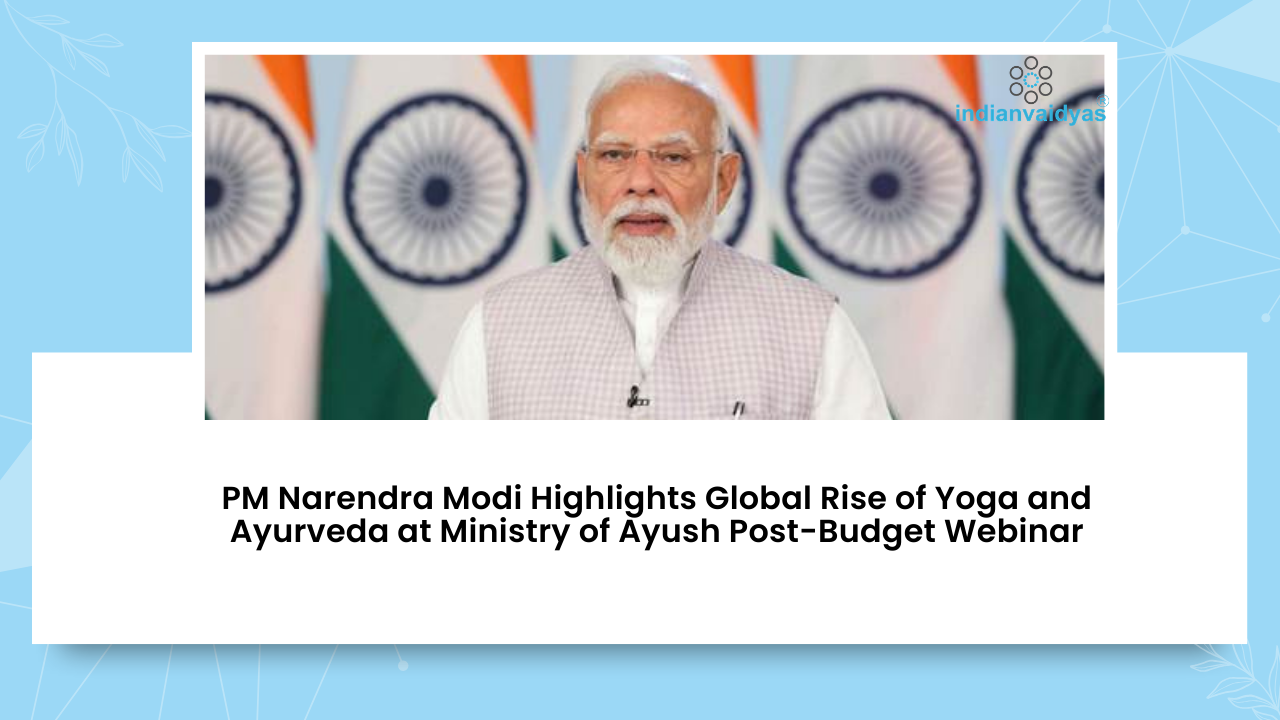
PM Narendra Modi Highlights Global Rise of Yoga and Ayurveda at Ministry of Ayush Post-Budget Webinar
09-Mar-26 19:46:37
Introduction: Ayurveda and Yoga at the Center of National Policy
At the Ministry of Ayush Post-Budget Webinar themed “Sabka Saath Sabka Vikas – Fulfilling Aspirations of People,” Prime Minister Narendra Modi delivered a strong message: Yoga and Ayurveda are gaining global popularity and becoming pillars of preventive healthcare worldwide.
This statement is not symbolic. It reflects a strategic shift in India’s health policy, where Ayush systems including Ayurveda, Yoga, Siddha, Unani, and Homeopathy are increasingly integrated into mainstream healthcare planning.
The implications are profound for:
• Preventive healthcare in India
• Global Ayurveda exports
• Growth of Vaidyas in India
• Institutional expansion of Ayush
• Integrative medicine models
This moment marks a defining stage in the evolution of Ayurveda from traditional knowledge to a global healthcare framework.
Understanding the Post-Budget Context
The Post-Budget Webinar followed the Union Budget 2026–27, which placed increased emphasis on healthcare infrastructure, research expansion, and preventive medicine.
Ayush has witnessed:
• Budgetary growth over recent years
• Institutional strengthening
• Research funding expansion
• International outreach programs
The Prime Minister’s speech connects fiscal planning with long-term health transformation.
This indicates that Ayurveda is not peripheral to India’s healthcare strategy — it is becoming foundational.
Why Yoga and Ayurveda Are Gaining Global Popularity
The global health landscape is changing rapidly. Rising chronic diseases, mental health stress, and lifestyle disorders have exposed limitations of purely symptomatic treatment models.
Ayurveda and Yoga offer:
-
Root-cause healing
-
Personalized treatment models
-
Holistic lifestyle correction
-
Preventive frameworks
-
Immunity strengthening
Search trends globally show increased queries for:
• Ayurvedic treatment for diabetes
• Natural remedies for stress
• Yoga for mental health
• Holistic healing India
• Preventive healthcare Ayurveda
International adoption of Yoga through International Yoga Day has further amplified India’s wellness leadership.
Preventive Healthcare: The Strategic Core of Ayurveda
Preventive healthcare focuses on avoiding disease before it develops. Ayurveda has historically emphasised:
• Dinacharya (daily routine)
• Ritucharya (seasonal discipline)
• Ahara (diet regulation)
• Vihara (lifestyle behaviour)
• Mental equilibrium
Modern lifestyle diseases such as:
• Type 2 diabetes
• Hypertension
• Obesity
• Cardiovascular disease
• Anxiety disorders
are often linked to metabolic imbalance and stress.
Ayurveda addresses these through systemic correction rather than symptom suppression.
The Prime Minister’s acknowledgement of Ayurveda’s global growth reflects recognition of this preventive advantage.
Institutional Expansion Under Ministry of Ayush
India has significantly expanded its Ayush infrastructure:
• All India Institute of Ayurveda (AIIA)
• National Institute of Ayurveda (NIA)
• CCRAS research centers
• State-level Ayurvedic colleges
• Integrated Ayush hospitals
Additionally:
• Medicinal plant cultivation missions
• Quality certification frameworks
• Global research collaborations
are strengthening the ecosystem.
This institutional backing enhances credibility and ensures structured growth.
Economic Implications of Global Ayurveda Growth
Ayurveda is not only a health movement — it is an economic sector.
India’s Ayurveda and herbal products industry is growing steadily due to:
• Rising global wellness demand
• Export market expansion
• Herbal nutraceutical growth
• Integrative medicine acceptance
The Prime Minister’s statement reinforces that Ayurveda contributes to:
• Rural employment
• Medicinal plant farming
• Health tourism
• International trade
As Yoga and Ayurveda become mainstream globally, India strengthens both cultural diplomacy and economic influence.
Rise of Integrative Medicine in India
One of the most important developments is integration.
Modern hospitals are increasingly adopting:
• Yoga-based stress programs
• Ayurvedic rehabilitation modules
• Post-illness recovery support
• Lifestyle correction clinics
This integrative model reduces long-term healthcare burden and supports preventive frameworks.
The government’s strategic messaging indicates this integration will deepen.
What This Means for Vaidyas in India
The growth of Ayurveda globally increases demand for:
• Registered Vaidyas
• MD Ayurveda specialists
• Research scholars
• Clinical practitioners
• Academic faculty
Major cities such as:
• Delhi
• Mumbai
• Hyderabad
• Bengaluru
• Chennai
• Pune
are witnessing increased interest in structured Ayurvedic consultations.
Digital platforms that connect patients with qualified Vaidyas in India are expected to grow significantly.
Ayurveda as India’s Soft Power Strategy
Yoga and Ayurveda function as instruments of soft power.
Through:
• International Yoga Day
• Bilateral Ayush MoUs
• Research collaborations
• Global conferences
India is shaping global perception of holistic healthcare.
The Prime Minister’s statement reinforces India’s intention to lead this space globally.
Long-Term Policy Direction
Based on recent developments, we can anticipate:
-
Increased Ayush budget allocations
-
Expansion of Ayurvedic medical education
-
Strengthening of research-based validation
-
International accreditation frameworks
-
Greater integration with mainstream healthcare
Ayurveda is transitioning from traditional legacy to policy-driven growth engine.
FAQ Section
What did PM Narendra Modi say about Ayurveda and Yoga?
Prime Minister Narendra Modi stated during the Ministry of Ayush Post-Budget Webinar that Yoga and Ayurveda are becoming increasingly popular across the world and are central to India’s preventive healthcare strategy.
Why is Ayurveda gaining global popularity?
Ayurveda is gaining global popularity because it focuses on preventive healthcare, holistic healing, lifestyle correction, and immunity enhancement. Rising lifestyle diseases have increased interest in natural and integrative medicine systems.
How does Ayurveda support preventive healthcare?
Ayurveda supports preventive healthcare through dietary regulation, seasonal discipline, stress management, metabolic correction, and immune support, helping prevent chronic diseases before they develop.
What is the role of the Ministry of Ayush?
The Ministry of Ayush promotes traditional Indian medical systems, including Ayurveda, Yoga, Siddha, Unani, and Homoeopathy, through institutional development, research funding, and global outreach initiatives.
How does this impact Vaidyas in India?
As Ayurveda expands globally, demand for qualified Vaidyas in India is increasing, particularly in urban centres and integrative healthcare models.
Ministry of AYUSH Social Media (For Official Statements)
Twitter (X):
https://x.com/moayush
YouTube:
https://www.youtube.com/@MinistryofAyushofficial
Instagram:
https://www.instagram.com/moayush