President Droupadi Murmu Calls Ayurveda and Yoga the Pathway to a Healthy Future at National Arogya Fair 2026
26-Feb-26 20:39:18
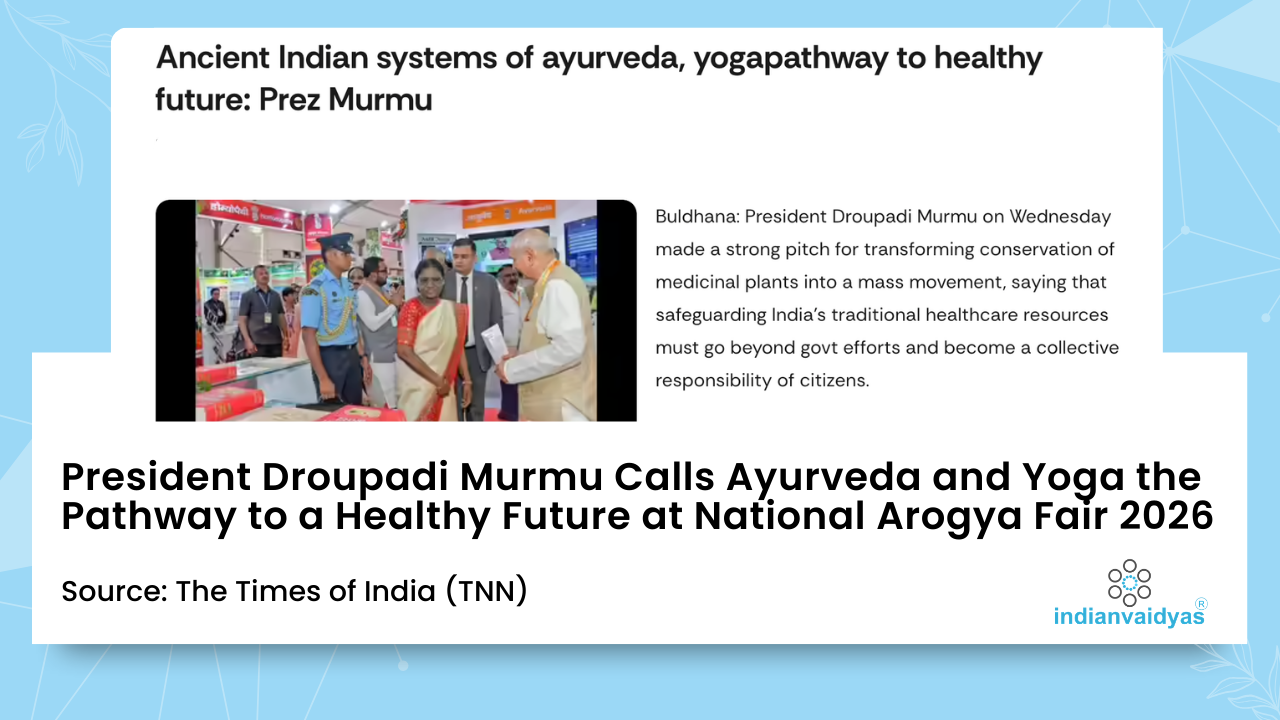
President Murmu Backs Ayurveda and Yoga as India’s Pathway to a Healthy Future
At the National Arogya Fair 2026 held in Shegaon, Maharashtra, President Droupadi Murmu emphasised the importance of India’s ancient healthcare systems, including Ayurveda and Yoga, in building a healthier and more sustainable future.
Speaking at the inauguration ceremony in Buldhana district, the President highlighted that the preservation and promotion of medicinal plants must evolve into a nationwide movement involving citizens, institutions, and healthcare practitioners.
Her remarks reflect growing national focus on strengthening traditional Indian healthcare systems under the Ministry of AYUSH.
Medicinal Plants: India’s Valuable Health Wealth
President Murmu described medicinal plants as a “valuable wealth” of the nation. She stressed that these plants are essential not only for producing Ayurvedic medicines but also for maintaining ecological balance and biodiversity.
India is home to thousands of medicinal plant species used in:
• Ayurveda
• Siddha
• Unani
• Yoga and Naturopathy
• Herbal pharmacology
Safeguarding these resources is critical for sustaining the Ayurvedic pharmaceutical industry and supporting Vaidyas in India.
Ayurveda and Yoga for Preventive Healthcare
The President reiterated that Ayurveda and Yoga offer a preventive, holistic approach to healthcare. Unlike symptomatic treatments, these systems focus on:
• Root-cause healing
• Dosha balance
• Lifestyle correction
• Mind-body harmony
• Natural immunity enhancement
With rising cases of lifestyle disorders such as diabetes, hypertension, stress disorders, and heart disease, Ayurveda and Yoga are increasingly being viewed as complementary healthcare solutions.
Search trends across India show growing demand for:
• Best Vaidyas in India
• Ayurvedic doctors in Delhi
• Ayurvedic treatment in Mumbai
• Yoga therapy centres in Hyderabad
• Integrative medicine in Bengaluru
This reflects a shift toward preventive and holistic wellness models.
National Arogya Fair 2026: A Platform for Integrative Health
The National Arogya Fair brings together:
• Ayurvedic institutions
• Research organizations
• Herbal medicine manufacturers
• Vaidyas and practitioners
• Policy makers
The event serves as a platform to promote evidence-based Ayurveda and strengthen India’s global leadership in traditional medicine.
India’s AYUSH sector has seen significant expansion in recent years, with increased investments in research, digital platforms, and export potential.
Global Relevance of Indian Traditional Medicine
President Murmu’s statement aligns with India’s growing international recognition in traditional healthcare systems.
Ayurveda is now being promoted globally through:
• International Yoga Day
• AYUSH Information Cells in multiple countries
• Bilateral healthcare collaborations
• Global herbal exports
India is positioning Ayurveda not merely as heritage medicine but as a scientifically supported integrative healthcare system.
Role of Vaidyas in India’s Health Future
Qualified and registered Vaidyas play a crucial role in translating classical Ayurvedic knowledge into modern healthcare practice.
As interest grows, it is important for patients to consult:
• NCISM-registered Ayurvedic doctors
• Institutional practitioners
• Certified Panchakarma centres
Platforms like indianvaidyas.com aim to connect people with trusted Vaidyas in India across major cities, including Delhi, Mumbai, Hyderabad, Bengaluru, Chennai, Kolkata, and Pune.
Why This News Matters
This development signals:
- Strong constitutional support for Ayurveda and Yoga
- Increased national awareness about medicinal plant conservation
- Policy-level backing for AYUSH growth
- Long-term healthcare transformation through integrative medicine
As India advances toward a preventive healthcare model, Ayurveda and Yoga are expected to become central pillars of national health policy.
Source
Primary Source: The Times of India (TNN)
Reporter: Dhananjay Sable
Event: National Arogya Fair 2026
Location: Shegaon, Buldhana, Maharashtra