The Kitchen Revolution: How UNESCO Metalcraft Tradition is Reimagining Ayurvedic Cookware for Modern Health
10-Jul-26 11:26:25
A silent health revolution is sweeping through urban households. Driven by rising concerns over microplastics from synthetic non-stick coatings and heavy metal leaching from cheap aluminum, home cooks are returning to ancient roots. By blending the timeless principles of Ayurveda News with contemporary designs, traditional handcrafted vessels are making a major comeback as the ultimate wellness upgrade.
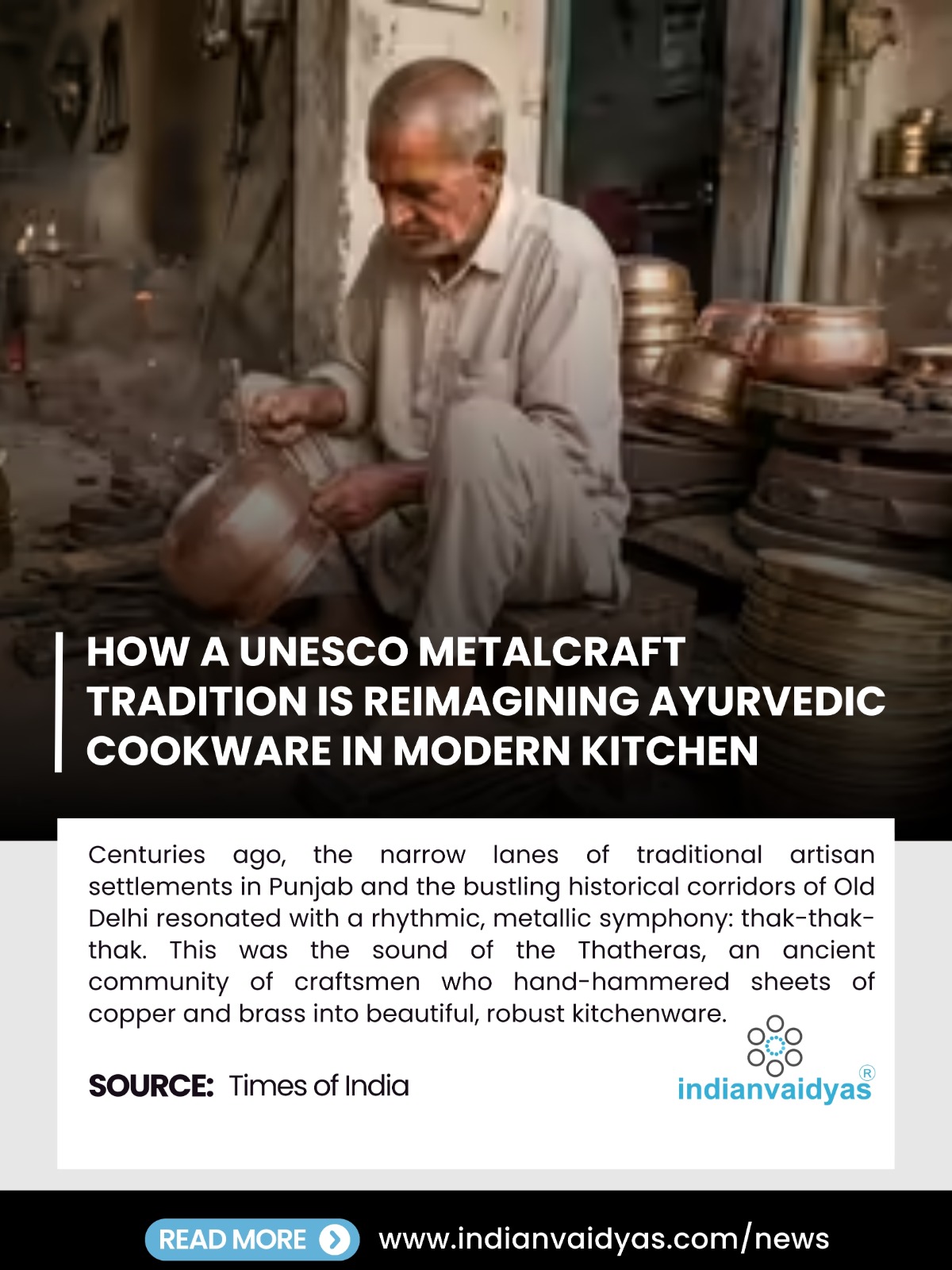
At the heart of this movement is the revival of the Thatheras—an ancient community of craftsmen from Punjab and Old Delhi who hand-hammer sheets of copper and brass. This craft holds the prestigious distinction of being the only Indian art form inscribed on UNESCO’s Representative List of the Intangible Cultural Heritage of Humanity.
The Ayurvedic Golden Rule: Brass, Copper, and Kansa
The core catalyst behind this shift is the realization that the material of a cooking vessel actively alters the chemistry of the food inside it. Modern holistic health practitioners are fiercely advocating for the foundational Ayurvedic rule of thumb:
1. Brass for Cooking
According to ancient texts, cooking food in brass (an alloy of copper and zinc) actively regulates strength and immunity. As food simmers, essential micronutrients like zinc and copper naturally infuse into the dish, boosting the nutritional profile of your daily meals.
2. Copper for Drinking
Copper is universally recognized in Ayurveda education for its water purification and charging properties. Water stored overnight in a copper vessel helps balance the body's three doshas (Vata, Pitta, and Kapha). Furthermore, modern science validates that copper has natural antimicrobial properties that eliminate harmful bacteria, improving overall gut hygiene.
3. Kansa (Bell Metal) for Eating
Referred to as the "healing metal," Kansa is an alloy of copper and tin. Eating from Kansa crockery helps maintain the body's pH balance, aids digestion, and boosts metabolism. Being a non-reactive metal, it is entirely safe for serving a diverse variety of acidic and non-acidic dishes.
Science Meets Soul: The Thermal Conductivity Advantage
While ancient wisdom speaks of vital energy, modern laboratory testing validates these benefits through thermodynamics. Brass and copper are among nature's finest conductors of heat. They distribute thermal energy evenly across the utensil, entirely eliminating hot spots that scorch food.
Lab tests indicate that uniform heat distribution retains up to six times more nutrition and blocks nutrient loss compared to thin stainless steel or aluminum pans. Instead of aggressively burning ingredients, traditional Ayurvedic cookware gently coaxes out flavors, preserving delicate vitamins and enzymes.
Smart Upgrades for the Modern Chef
To bridge the gap between heritage and utility, these traditional metals have undergone smart ergonomic upgrades. Heavy pans are now outfitted with insulated handles to suit modern gas and induction stoves.
Most importantly, to eliminate chemical reactions with sour or citrus ingredients, the interiors of cooking vessels are lined with traditional, pure tin (kalai). The tin coating acts as a safe, completely inert barrier, making the cookware versatile, non-stick, and 100% safe for daily Indian cooking without any toxic Teflon scraping into your food.
Forging a Sustainable and Healthy Future
The return to traditional cookware goes beyond personal health—it is a socioeconomic victory. Standardized metallurgical proportions (such as the ideal 78:22 copper-to-tin ratio for pure Kansa) have built immense consumer trust.
This growing market demand has turned rural metalcraft into a highly lucrative profession, encouraging the younger generation of artisans to proudly return to their ancestral hammers. By embracing these time-tested metals, the modern household achieves a beautiful synergy of preventative wellness, premium culinary aesthetics, and rural economic empowerment.