Tripura Cabinet Approves Establishment of Ayurveda & Homeopathy Colleges to Strengthen AYUSH Education
20-Apr-26 07:27:43
Introduction
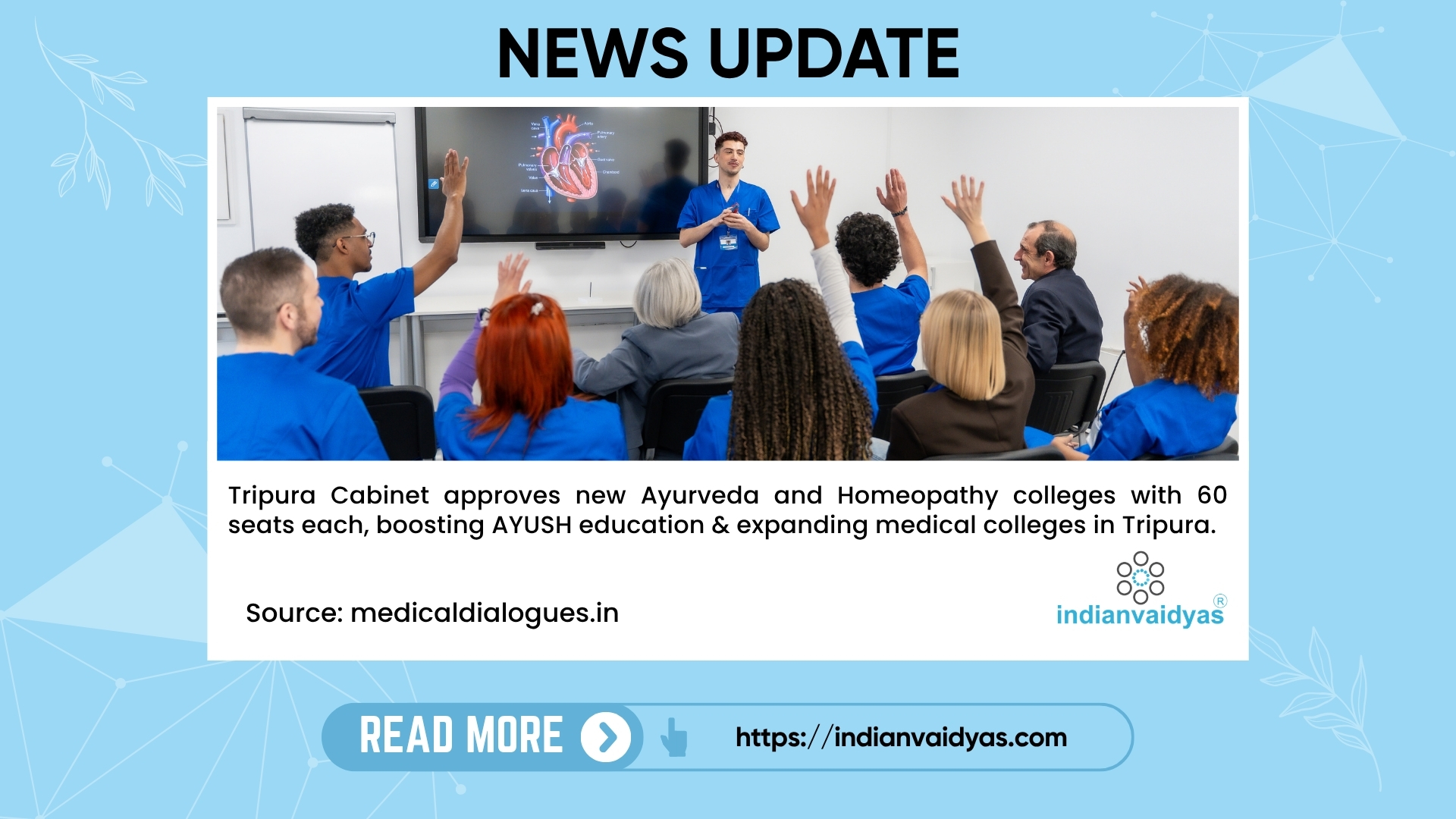
In a strategic move to strengthen India’s traditional healthcare education system, the Tripura Cabinet has approved the establishment of dedicated Ayurveda and Homeopathy medical colleges. This initiative reflects the government’s continued focus on expanding AYUSH education and improving access to healthcare in the Northeast region.
About the Development
As per the recent cabinet decision, two new institutions—one for Ayurveda and one for Homeopathy—will be established with an intake capacity of 60 seats each. These colleges are expected to commence academic activities from the 2026–27 session.
The Ayurveda college will initially function from a temporary campus in Chandrapur, with plans to shift to a permanent facility in Tepania. The Homeopathy college will be developed within the premises of an existing government homeopathic hospital in West Tripura.
Key Highlights
-
Approval for two AYUSH medical colleges in Tripura
-
60 seats are allocated for each college
-
Academic session to begin from 2026–27
-
Focus on strengthening regional healthcare education
-
Infrastructure development aligned with AYUSH expansion goals
Strategic Significance
This development is particularly important for the Northeast region, where access to specialized medical education remains limited. The introduction of Ayurveda and Homeopathy colleges is expected to:
-
Expand academic opportunities in traditional medicine
-
Strengthen the AYUSH workforce pipeline
-
Promote integrative healthcare practices
-
Enhance accessibility to holistic treatment systems
Indianvaidyas Perspective
The expansion of AYUSH institutions in emerging regions like Tripura signals a progressive shift toward inclusive healthcare education. Strengthening Ayurveda and Homeopathy at the academic level not only preserves traditional knowledge but also aligns it with modern healthcare demands.
Indianvaidyas views this as a crucial step toward building a more balanced and integrative healthcare ecosystem in India.
Conclusion
The Tripura Cabinet’s decision marks a forward-looking approach to healthcare education. By investing in Ayurveda and Homeopathy institutions, the state is contributing to a broader national vision of promoting holistic and sustainable medical systems.
Source:medicaldialogues.in