United States Withdraws from World Health Organization, Removes Flag from Geneva Headquarters
29-Jan-26 06:30:19
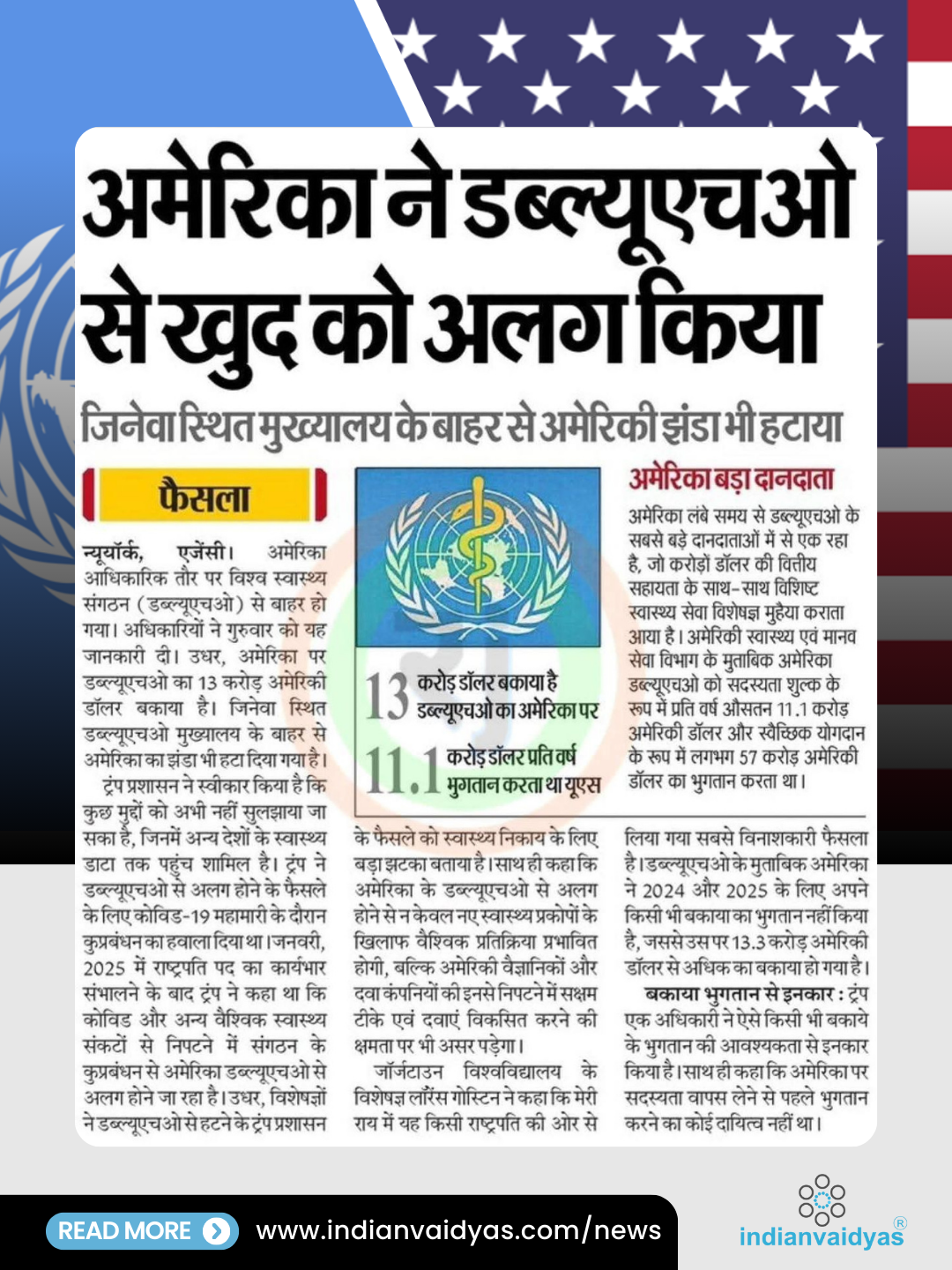
New York/Geneva: The United States has officially withdrawn from the World Health Organization (WHO), marking a significant development in global health governance. Following the decision, the American flag has been removed from outside the WHO headquarters in Geneva, symbolizing the country’s exit from the global health body.
The move comes amid long-standing disagreements between the U.S. administration and the WHO regarding organisational transparency, decision-making processes, and responses to international health crises.
Impact on WHO Funding
The United States has historically been one of the largest contributors to the World Health Organisation. According to reports, the U.S. provided approximately USD 111 million annually to the organisation and currently has outstanding dues of approximately USD 130 million.
With the U.S. withdrawal:
-
WHO may face increased financial pressure
-
Several global health programs could be affected
-
Developing countries that rely on WHO-supported initiatives may experience delays
Reasons Behind the Decision
U.S. officials have cited multiple reasons for the withdrawal, including:
-
Concerns over lack of transparency in WHO’s governance
-
Dissatisfaction with the organization’s handling of global health emergencies
-
A desire to independently manage international health funding and strategy
However, several global health experts have expressed concern that the decision could weaken international cooperation in addressing future health crises.
Possible Global Health Implications
Health policy analysts believe that the U.S. exit from the WHO could:
-
Affect global pandemic preparedness and coordination
-
Slow down international data sharing and research collaboration
-
Force the WHO to seek alternative funding sources to sustain operations
The long-term impact on global public health systems remains to be seen.
IndianVaidyas Perspective
According to IndianVaidyas, the development highlights a shifting landscape in global health policy, where nations may increasingly focus on strengthening domestic healthcare systems. In this context, traditional and integrative medical systems, including Ayurveda and other AYUSH practices, may gain greater relevance as countries aim to build resilient and self-reliant health ecosystems.
Source: Jagran.com , India TV
(Based on published news reports)