Uttar Pradesh to Establish 18 Ayurveda Gurukulam Colleges: Traditional Admissions Without NEET Requirement
01-Aug-26 06:13:16
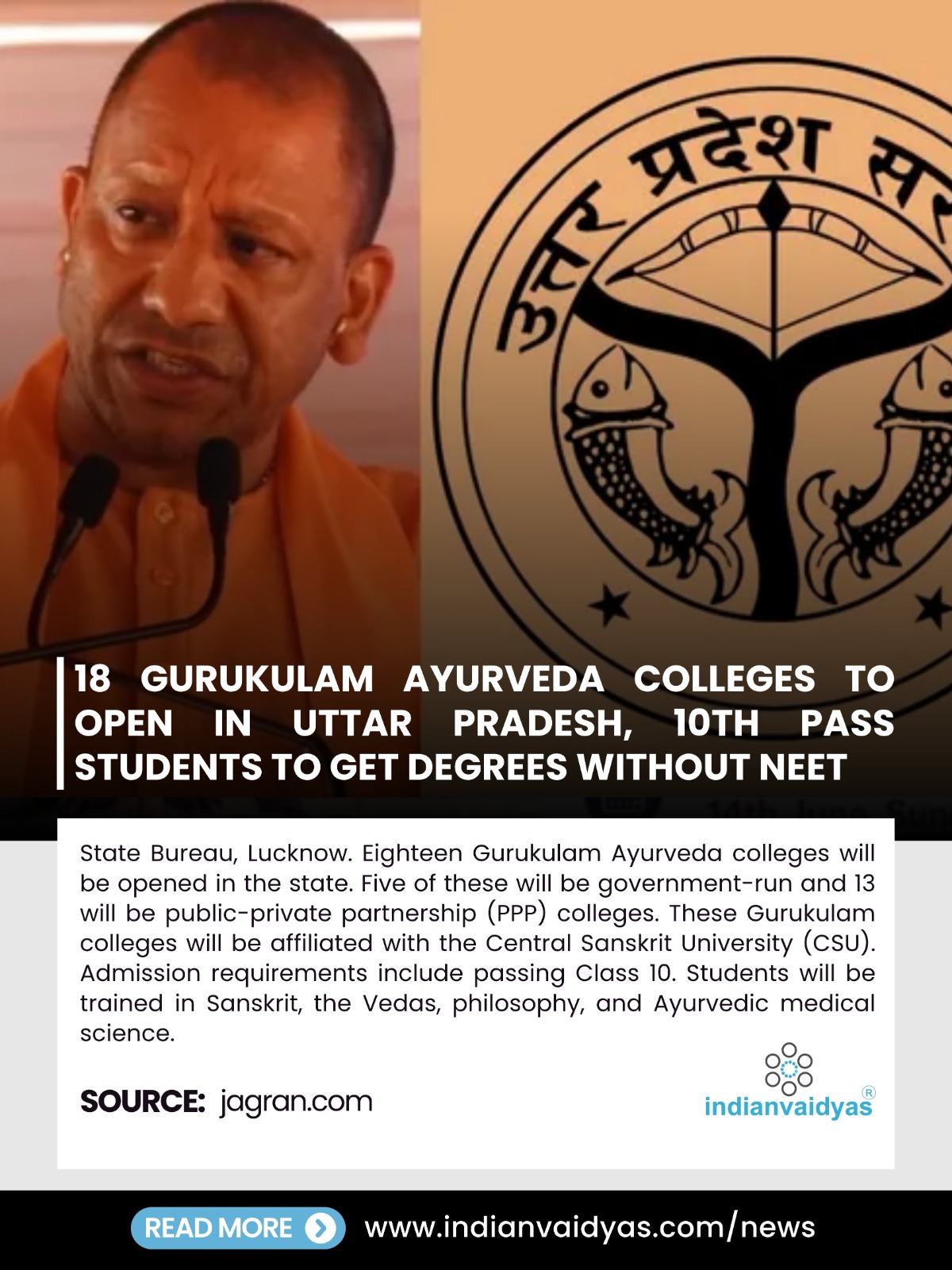
In a major policy move aimed at reviving traditional Indian pedagogy and preserving classical medical heritage, the Uttar Pradesh government has announced plans to establish 18 Ayurveda Gurukulam colleges across the state.
Under this new educational framework, admissions to these specialized institutions will follow traditional Gurukul-based selection criteria and foundational Sanskrit learning, without requiring NEET (National Eligibility cum Entrance Test) scores.
The initiative seeks to blend classical Guru-Shishya Parampara (teacher-disciple tradition) with practical clinical training, creating a dedicated cadre of Vaidyas deeply versed in classical Ayurvedic texts, herbal identification, and traditional diagnostic methods.
Revival of Classical Pedagogy: What Makes the Gurukulam Model Unique?
Unlike conventional modern Ayurvedic colleges regulated through standard national entrance tests, these 18 Gurukulam institutions will operate under a distinct academic model designed to restore the depth of ancient medical education.
Key highlights of the proposed Gurukulam system include:
-
No NEET Requirement: Admissions will prioritize students with strong foundations in Sanskrit, classical philosophy (Shastras), and traditional learning aptitude, evaluated through state-level selection processes rather than standardized NEET testing.
-
Experiential Learning: Students will live and study within residential Gurukul campuses, emphasizing hands-on training in Dravyaguna (herbal identification), Rasa Shastra (pharmaceutical preparation), and bedside patient care.
-
Focus on Sanskrit Proficiency: Teaching will rely heavily on original Sanskrit Samhitas (Charaka, Sushruta, and Vagbhata), enabling scholars to interpret classical medical wisdom without relying solely on modern translations.
Strengthening the Ayush Ecosystem and Rural Healthcare
State officials emphasize that this initiative will not replace the existing BAMS framework but will run parallel to it, creating a specialized stream of traditional practitioners.
As demand for authentic holistic healthcare grows globally, establishing these colleges across 18 divisions in Uttar Pradesh is expected to address rural healthcare shortages, promote herbal conservation, and strengthen local wellness infrastructure.
This development marks a significant shift in Ayurveda education, offering an alternative academic pathway for students passionate about traditional Indian medicine and classical scholarship.
State agencies working alongside the Ministry of Ayush are currently finalizing the curriculum framework, affiliation guidelines, and campus locations for the upcoming academic sessions.
Stay tuned to our Ayurveda News hub for ongoing policy updates, admission notifications, and academic developments across the Ayush sector.